
Wasp nests are easy to find when they are built in obvious locations—under an eave near the front door, on a fence rail in plain sight, or in a tree that is regularly walked past. Those nests get addressed quickly because they are visible. The nests that cause the most problems in Boise are the ones that are not visible until they have been building for months and the colony has reached a size where disturbance triggers a serious response. Wild West Pest Control provides wasp control throughout Boise and the Treasure Valley, and the locations described below are where our technicians most commonly find nests that homeowners were not aware of.
Inside Wall Voids
Wall void nests are among the most hazardous wasp situations a Boise homeowner can encounter because they are completely invisible until the colony is already large. Yellowjackets are the species most commonly associated with wall void nesting in Treasure Valley homes. They access wall interiors through gaps in siding, through weep holes in brick construction, around utility penetrations, and through any opening large enough for a worker to pass through.
Once inside a wall void, a yellowjacket colony can grow through the summer without any visible indication of its presence except for workers entering and exiting the access point. By August, a wall void nest that began in May can contain thousands of workers. Homeowners who notice wasps entering and exiting a small gap in the siding—particularly around windows, utility entries, or at the base of the wall—should treat this as a significant finding requiring professional attention rather than a minor observation.
The additional risk with wall void nests is that the colony may chew through interior wall materials as it expands, potentially creating a breach into the living space. Yellowjacket workers that emerge inside a home through a wall void breach present a hazardous situation that is far more difficult to manage than an exterior nest.
Under Deck and Porch Structures
The sheltered, dark spaces under decks, porches, and elevated structures are consistently productive nesting locations for both yellowjackets and paper wasps in Boise. The combination of protection from weather, stable temperatures, and proximity to foraging territory makes these spaces attractive from early spring onward.
Ground nests under decks are particularly common. Yellowjackets excavate nests in the soil beneath deck boards, and the deck structure above provides both weather protection and a physical barrier that makes the nest entrance difficult to see without specifically looking for it. Homeowners who use their deck regularly through spring and summer may be unaware of an established nest in the soil directly beneath them until they disturb it by stepping near the entrance or performing maintenance on the deck structure.
Paper wasp nests attached to the underside of deck joists and porch framing are also common findings during inspections. These nests are sheltered from rain and wind and are often not visible from ground level.
Inside Outdoor Furniture and Equipment
Boise homeowners regularly discover wasp nests inside outdoor furniture that has been stored or unused for a period—inside hollow chair legs, inside rolled-up outdoor cushion storage bags, inside the legs of patio tables, and inside any hollow structure in the yard. Paper wasps are the species most commonly associated with this nesting pattern.
Gas grills that are used infrequently are a classic nest site—paper wasps build inside the grill body, in the burner area, and in the storage cabinet below the cooking surface. Homeowners who open a grill that has been unused since the previous season are at risk of encountering an established nest.
Similarly, outdoor play equipment—slides, climbing structures, and swing set frames—frequently hosts paper wasp nests in hollow structural members. These nests are directly hazardous for children using the equipment.
Attic Spaces and Soffits
Attic vents, gaps at soffit intersections, and spaces behind exterior trim provide access to attic spaces that yellowjackets and bald-faced hornets use for nest sites. Attic nests are invisible from outside the home and are often not discovered until a homeowner enters the attic for storage or maintenance and finds an established colony.
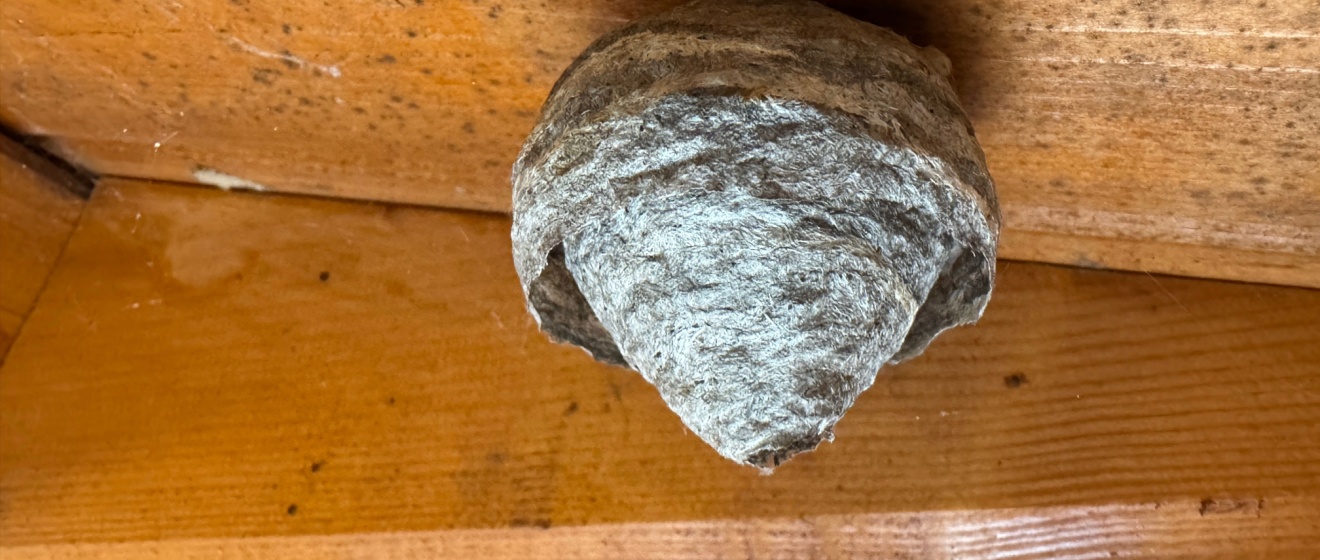
Bald-faced hornets occasionally build their enclosed paper nests inside attic spaces, and these nests can reach impressive size in the warmth of a Boise attic during summer. Attic temperatures in Treasure Valley homes during July and August are consistently high, which accelerates colony development. A nest that has been building since May in a warm attic space can be very large by the time it is discovered.
Underground in Lawn and Garden Areas
Ground nesting is the most common nesting pattern for yellowjackets in the Treasure Valley, and the locations they select are often not obvious. Nests in open lawn areas are found when a homeowner mows over or walks near the entrance—a small hole in the soil, sometimes ringed by excavated dirt, that gives no indication of the several thousand workers that may be present below.
Garden beds with loose, well-drained soil are particularly attractive nesting sites. The soil conditions in a cultivated garden bed are ideal for yellowjacket excavation, and the regular gardening activity in these areas means that nests are frequently disturbed before they are detected. Compost piles, areas of thick ground cover, and the soil around the base of shrubs are other common ground nest locations in Boise backyards.
Root Zones of Trees and Shrubs
The root zones of established trees and shrubs in Boise yards frequently host yellowjacket ground nests. The loose, partially sheltered soil around root systems provides good excavation conditions, and the vegetation above provides shade that helps regulate nest temperature. Nests in root zones are particularly hard to detect because the ground surface is obscured by vegetation and mulch.
What to Do When You Find a Hidden Nest
Any nest discovered in a location where people regularly pass through or work near—under a deck, in a wall void, in outdoor furniture, or in a garden area—should be treated professionally rather than with over-the-counter products. Hidden nests in enclosed spaces are more dangerous to treat than open exterior nests because the colony’s response to a disturbance is concentrated in a confined area with limited escape routes.
Wild West Pest Control locates and treats wasp nests in all of the locations described above. Contact us for a free quote if you have found or suspect a nest on your Boise property.