

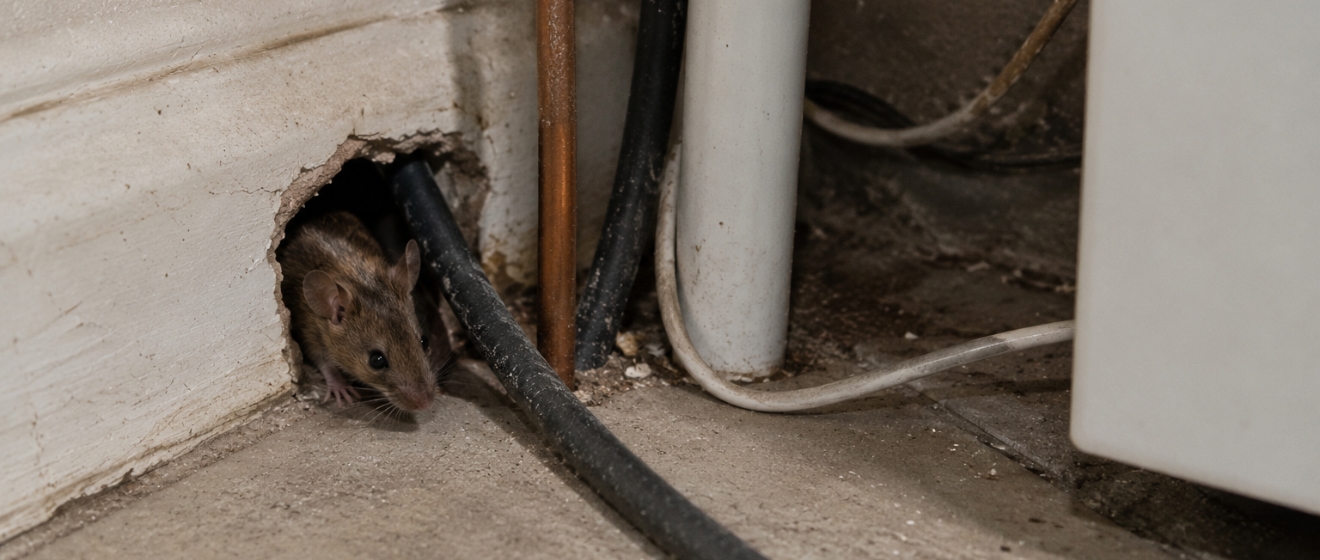
Finding droppings or hearing scratching naturally raises one urgent question: where are the mice getting in? The answer is often a small construction gap rather than an obvious hole. Boise homes vary in age and design, but several entry points appear repeatedly during rodent inspections. Wild West Pest Control provides Boise rodent control and exclusion that connects indoor evidence with the exterior route mice are using.
1. Gaps Beneath and Beside the Garage Door
Garage doors rarely seal perfectly across the entire opening. Worn bottom seals, uneven concrete, damaged side weatherstripping, and open corners can leave enough space for a mouse. The garage then gives rodents access to stored food, wall voids, attic areas, and doors leading into the home.
Inspect the door from inside after dark while exterior lights are on. Visible light can reveal gaps, though a professional inspection is still useful because some routes remain hidden. Replacement seals must fit the door and surface correctly; stuffing a corner with a temporary material rarely provides a durable repair.
2. Openings Around Pipes, Cables, and Utility Lines
Plumbing, electrical, air-conditioning, irrigation, and communication lines pass through exterior walls and foundations. The space around a penetration may expand as sealant ages or building materials shift. Mice follow these lines into wall voids, crawl spaces, utility rooms, and cabinets.
Each opening needs a repair material appropriate for moisture, movement, heat, and exposure. Soft foam alone may be easy for rodents to damage. A durable exclusion repair often combines rodent-resistant material with a suitable exterior seal.
3. Foundation and Crawl-Space Gaps
Cracks, missing vent screens, access doors that do not close tightly, and gaps where framing meets masonry can lead into a crawl space. Once beneath the home, mice can move around plumbing and wiring penetrations to reach interior walls.
Crawl spaces should be inspected carefully and safely. Damaged vents need a repair that blocks rodents while preserving required airflow. Moisture, insulation damage, and accumulated debris may also make the space more attractive.
4. Roof, Soffit, and Fascia Intersections
Not every mouse enters at ground level. Gaps along roof edges, soffits, fascia, and intersecting rooflines can lead into attic spaces. Nearby trees, fences, vines, downspouts, and attached structures may help pests reach elevated openings.
Roof-level exclusion should be performed without creating ventilation or drainage problems. It may also require safe access equipment. Homeowners can look from the ground for loose materials, staining, or visible openings but should avoid unsafe climbing.
5. Damaged or Unscreened Vents
Dryer vents, attic vents, crawl-space vents, foundation vents, and exhaust openings can become entry points when covers are broken or missing. Some vent designs remain open when a flap sticks. Rodents may enlarge damage that begins as a small defect.
Vent protection must account for the vent’s purpose. Dryer exhaust, combustion air, and other building systems cannot simply be blocked. Proper covers and screens should prevent access without interfering with safe operation.
6. Siding Corners and Exterior Trim
The visible face of siding may look intact while corners, lower edges, and transitions conceal openings. Gaps can develop where siding meets stone, brick, roofing, decks, or additions. Mice travel along edges and may disappear behind a trim piece that appears decorative.
A full inspection follows these transitions around the entire building. Droppings, gnawing, nesting material, and rub marks may confirm that a suspicious gap is active rather than merely cosmetic.
7. Doors With Worn Sweeps or Weatherstripping
Exterior doors, side garage doors, and doors between the garage and house can develop gaps as sweeps wear down or thresholds shift. A door that looks closed may still have open space at one lower corner. Mice tend to travel along walls, making those corners especially important.
Replace damaged components instead of relying on towels or loose barriers. The door should close and latch normally after the repair. Check basement, patio, and utility doors that receive less daily attention.
8. Openings Created During Repairs or Remodeling
New plumbing, cable installation, additions, roof repairs, and exterior upgrades can leave small gaps. Construction may also disturb rodents living nearby and change their travel routes. Even a well-maintained newer home can develop a vulnerability where two building systems meet.
After work is completed, inspect penetrations, temporary access areas, and transitions between old and new materials. Contractors may close the visible finish while a concealed path remains behind it.
Finding the Entry Point Requires More Than Sealing Random Cracks
Mouse exclusion begins with evidence. Indoor droppings and damage reveal travel areas. Exterior inspection identifies openings that match those routes. Control and monitoring help determine whether rodents remain inside. The work should also preserve drainage, ventilation, and access to mechanical systems.
Homeowners can help by clearing garage walls, moving stored food into sealed containers, trimming dense vegetation, and noting exactly where sounds or droppings appear. Photos and dates can reveal a useful pattern.
A house may have dozens of small gaps, but only some require specialized repair. Wild West Pest Control can identify the likely routes, address the rodent population, and recommend targeted exclusion for the property. Request a rodent inspection for a Boise or Treasure Valley home before mice settle deeper inside.