
Boise’s summer climate is defined by heat and low humidity. Average July temperatures regularly exceed 95 degrees Fahrenheit, and the city receives less than 12 inches of annual precipitation—most of it concentrated in the cooler months. That hot, dry summer pattern is one of the defining characteristics of the Treasure Valley’s high desert climate, and it creates conditions that are consistently favorable for wasp populations in ways that homeowners may not immediately connect to the weather.
Wild West Pest Control provides wasp control throughout Boise and the surrounding area, and the relationship between Boise’s summer climate and wasp activity is something we see reflected clearly in the timing and intensity of pest calls throughout the season.
Heat Accelerates Colony Growth
Wasp colonies are temperature-dependent in their development. Higher temperatures speed up the metabolic processes of larvae and accelerate the time it takes for eggs to develop into adult workers. In Boise’s hot summers, yellowjacket and paper wasp colonies grow faster than they would in cooler climates. A colony that started in April with a single queen builds more rapidly through June and July in the Treasure Valley’s heat than it would in a more temperate region, reaching peak worker populations earlier in the summer.
The practical effect is that Boise homeowners encounter large, well-established wasp colonies earlier in the summer than they might expect. A yellowjacket nest that has been quietly developing since April can reach a population of several thousand workers by July—early enough that late-summer outdoor activities are already encountering maximum colony aggression well before August arrives.
Dry Conditions Drive Wasps to Water Sources
Wasps, like all insects, require water. In Boise’s dry summers, natural water sources outside of irrigated residential areas become scarce by June and July. Wasps actively seek water and are drawn to any available source—birdbaths, dripping irrigation heads, standing water in gutters and containers, swimming pool edges, and the condensation that collects around outdoor HVAC units.
This drives wasps toward residential properties in summer in ways that would not occur in wetter climates. A property with consistent water access—an irrigated lawn, a water feature, a dripping hose bib—becomes a reliable destination for wasps from surrounding areas. Homeowners notice increased wasp activity around water sources that they would not associate with a pest problem, and the activity intensifies as the summer progresses and natural water becomes increasingly scarce in unirrigated areas.
Heat Stress Increases Wasp Aggression
Wasp aggression is not constant throughout the season—it increases as colony size grows and as food and water resources become more competitive. In late summer, Boise’s heat compounds both of these factors simultaneously. Colonies are at peak size, requiring more food than earlier in the season. Natural insect prey—the protein wasps feed their larvae—becomes harder to find as the summer heat reduces insect populations in unirrigated areas. The competition for resources intensifies, and wasp behavior becomes more defensive and more aggressive in response.
This is the window—August through September in Boise—when accidental disturbances of wasp nests during yard work are most dangerous and when unprovoked encounters with foraging wasps near food and drinks are most frequent. The heat that characterizes Boise’s late summer is directly related to the behavioral shift that makes wasps more hazardous during this period.
Hot, Dry Conditions Favor Specific Nesting Sites
Boise’s dry summer climate affects where wasps choose to nest as well as how quickly their colonies grow. Yellowjackets that nest in the ground prefer dry, well-drained soil—the kind that dominates in unirrigated areas throughout the Treasure Valley in summer. Dry soil is easier to excavate and maintains more stable conditions inside the nest cavity than saturated or damp soil. Properties with dry, open soil areas in their yards—particularly along south-facing slopes, under decks, and in areas with sparse vegetation—are consistently more attractive to ground-nesting yellowjackets than properties with well-irrigated, dense lawn coverage.
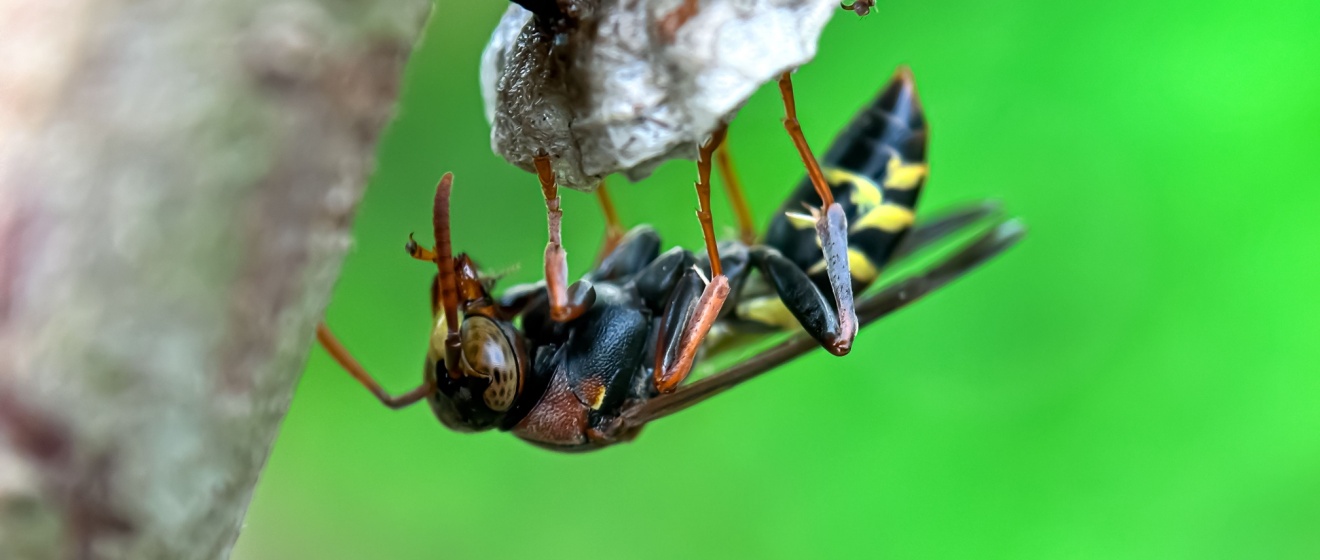
Paper wasps building aerial nests under eaves and in sheltered structural spaces are also favored by dry conditions. Wet weather can damage paper nests, and in Boise’s reliably dry summers, paper wasp nests built in April face minimal weather-related disruption through the entire season, allowing colonies to develop fully without the setbacks that rain and moisture cause in wetter climates.
The Late-Summer Convergence
The most challenging wasp period in Boise occurs when several of these factors converge in August and September: peak colony size, declining natural food sources, increased competition for water, and the behavioral aggression that accompanies resource scarcity. For homeowners in the Treasure Valley, this convergence produces the most intense and most hazardous wasp encounters of the year—and it happens reliably, every summer, as a direct consequence of Boise’s climate.
Understanding this pattern helps homeowners plan ahead. The best time to address wasp nests in Boise is spring and early summer—April through June—when colonies are small, workers are fewer, and treatment is safer and more straightforward. Waiting until August to address a nest that has been present since April means dealing with a colony that is at maximum size and maximum defensiveness.
Professional Wasp Control in Boise
Wild West Pest Control handles wasp nest removal and stinging insect control throughout Boise and the Treasure Valley. Our bi-monthly service plans include cobweb and wasp nest removal as a standard component, which means properties on a recurring treatment schedule have nests addressed before they reach the dangerous late-summer size. For existing nests or properties not currently on a service plan, contact us for a free quote and we will assess the situation and provide safe, effective treatment.