

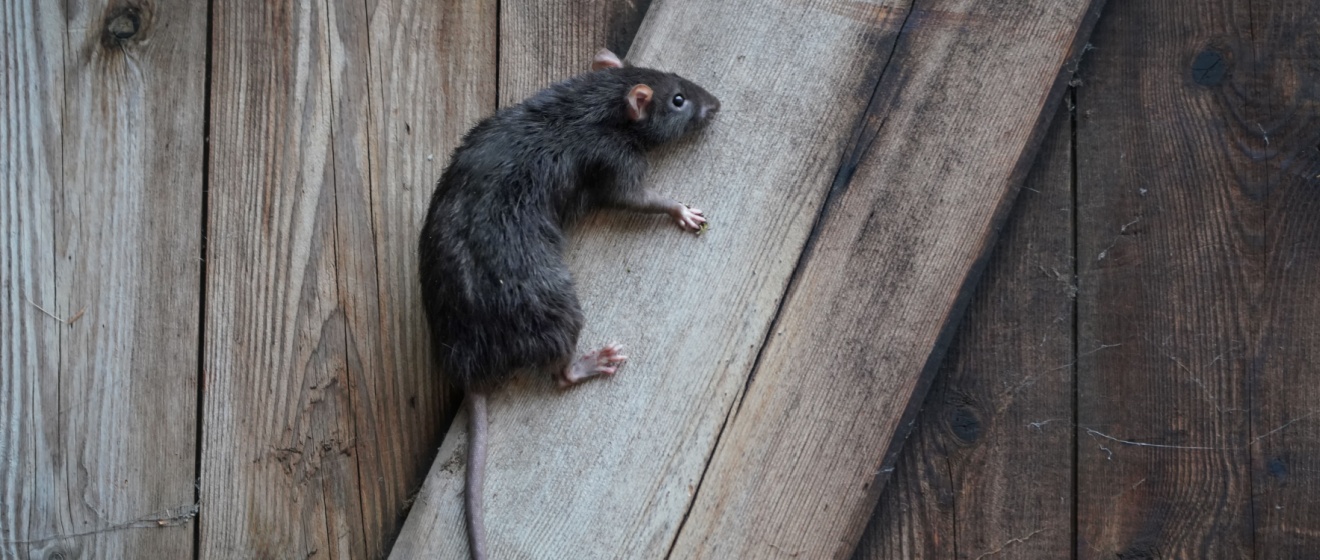
Not all rodents are created equal, and knowing which species has invaded your Boise home significantly impacts your control strategy. The Treasure Valley is home to several rodent species, but three dominate residential infestations. Understanding how to identify common local rodents helps you communicate effectively with pest control professionals and recognize the severity of your situation.
House Mouse: The Most Common Indoor Invader
Physical characteristics: House mice are small, typically measuring 5-8 inches from nose to tail tip. They have dusty gray-brown fur with cream or buff-colored bellies. Their ears are proportionally large, and their tails are nearly as long as their bodies with very fine hair coverage.
Identifying features: House mice have small, beady black eyes and a pointed nose. Their droppings are small—about the size of a grain of rice—dark brown or black, and pointed at both ends.
Behavior patterns: House mice are highly adaptable to indoor environments and actually prefer living inside human structures. They’re curious and will readily explore new objects, making trap placement easier than with rats. House mice don’t require much water if moisture content in food is adequate.
Where you’ll find them: House mice nest in wall voids, cabinets, behind appliances, in stored boxes, and inside furniture. They stay close to food sources, typically traveling no more than 10-30 feet from their nests. In Boise homes, kitchens, pantries, and garages are prime locations.
Reproduction rate: House mice breed prolifically, with females producing 5-10 litters per year of 5-6 babies each. They reach sexual maturity in just 6-10 weeks, meaning populations explode rapidly if not controlled.
Signs of house mouse activity:
- Small droppings scattered along travel routes
- Gnaw marks on food packaging and cardboard
- Musty odor in enclosed spaces
- Tiny pawprints in dusty areas
- Nesting materials (shredded paper, fabric, insulation) in hidden spots
Deer Mouse: The Disease Carrier
Physical characteristics: Deer mice (sometimes called field mice) are similar in size to house mice but distinctly bi-colored. They have brown or gray-brown backs with sharp contrast to pure white undersides and feet. This two-tone appearance is the key identifying feature.
Identifying features: Deer mice have larger eyes relative to house mice, giving them a slightly “cuter” appearance. Their tails are bi-colored to match their bodies—dark on top, white below. Droppings are similar to house mouse droppings but may be slightly larger.
Behavior patterns: Unlike house mice, deer mice prefer outdoor environments and typically nest in vegetation, woodpiles, sheds, or garages rather than deep within homes. When they do enter structures, they usually stay in attics, crawl spaces, or attached garages rather than main living areas.
Where you’ll find them: In Boise, deer mice are common around properties near open spaces, foothills, or agricultural areas. They nest in outdoor structures first and only occasionally venture into homes, usually accessing attics or upper levels.
Critical health concern: Deer mice carry hantavirus, a potentially fatal respiratory disease transmitted through contact with rodent urine, droppings, or saliva. This makes deer mouse infestations particularly dangerous and requires special cleanup precautions.
Signs of deer mouse activity:
- Bi-colored droppings in attics or storage areas
- Nests in stored items, especially in garages or sheds
- Activity concentrated in upper levels or attached structures
- Evidence of climbing (they’re excellent climbers)
Norway Rat: The Larger Threat
Physical characteristics: Norway rats are substantially larger than mice, weighing 7-18 ounces and measuring 13-18 inches total length (including tail). They have thick, heavy bodies with coarse brown or gray-brown fur. Their undersides are lighter gray or buff-colored.
Identifying features: Norway rats have small ears relative to their body size, blunt noses, and thick, scaly tails that are shorter than their head and body combined. Their droppings are much larger than mouse droppings—about 3/4 inch long, blunt-ended, and capsule-shaped.
Behavior patterns: Norway rats are cautious and neophobic (fearful of new things). They avoid new objects in their environment for several days, making them harder to trap than mice. They’re primarily ground-dwellers and excellent swimmers.
Where you’ll find them: Norway rats prefer ground-level locations. They burrow extensively, creating tunnels under concrete slabs, foundations, and garden debris. Inside homes, they inhabit basements, crawl spaces, and lower wall voids. They’re particularly common in Boise properties near irrigation canals or with accessible basements.
Reproduction and colony behavior: Females produce 4-7 litters per year with 6-12 babies each. Norway rats are more social than mice, often living in colonies with established hierarchies. This means if you see one rat, many more likely exist.
Signs of Norway rat activity:
- Large droppings in concentrated areas (rats defecate in specific locations)
- Burrow openings 2-4 inches in diameter near foundations
- Greasy rub marks along travel routes at ground level
- Substantial gnaw damage to wood, plastic, and even soft metals
- Heavy sounds of movement in walls or under floors at night
Why Proper Identification Matters
- Treatment strategies differ by species: Mice respond to different baits and trap placements than rats. Deer mice require special handling due to hantavirus concerns. Understanding your target species improves control effectiveness.
- Risk assessment varies: Deer mice pose immediate health risks requiring professional cleanup. Norway rats cause more structural damage and require more aggressive exclusion work.
- Population estimation depends on species behavior: Seeing one mouse suggests a small infestation, while seeing one rat often indicates many more hidden nearby.
What If You’re Not Sure?
If you’re uncertain which rodent species is in your home, professional identification is worth the investment. Pest control experts can identify species from droppings, damage patterns, and behavioral signs, then implement appropriate control strategies.
Don’t try to capture a rodent to identify it—this creates unnecessary exposure to potential diseases and bites. Instead, take photos of droppings, damage, or (safely, from a distance) the rodent itself to share with professionals.
Understanding what you’re dealing with is the first step toward effective control. Contact Wild West Pest Control today for expert rodent identification and customized treatment plans for the specific species affecting your Boise home.