
Flies are among the most common and most frustrating pest problems Boise homeowners encounter. They appear seemingly out of nowhere, they are difficult to control once established, and the approach that works for one type of fly does not necessarily work for another. The key to resolving a fly problem is identifying which type of fly you are dealing with, because different flies have different breeding sources, and eliminating the breeding source is the only way to resolve the problem permanently.
Wild West Pest Control provides fly control throughout Boise and the Treasure Valley, including seasonal fly control service from April through October. The guidance below covers the most common fly problems in Boise homes and what to do about each.
First: Identify the Type of Fly
The single most important step in resolving a fly problem is determining what kind of fly you have. Swatting the flies you see does nothing to address the source producing them, and the source differs significantly by species. The flies most commonly found in Boise homes fall into a handful of categories, each with a distinct breeding source.
House Flies
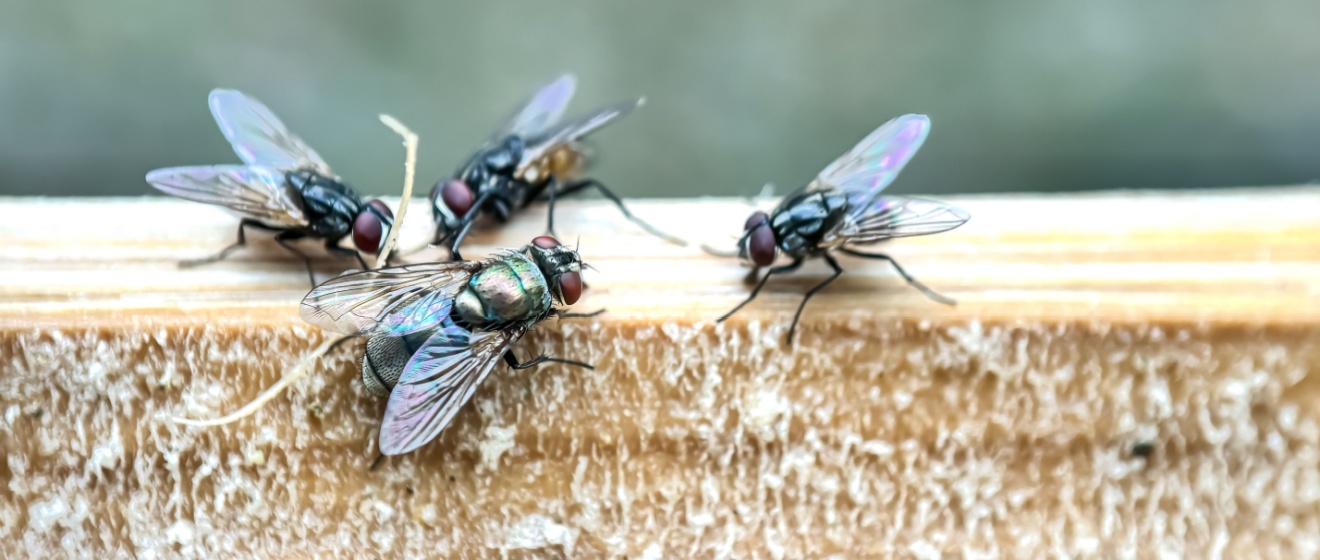
House flies are the large, familiar flies most people picture when they think of a fly problem. They breed in decaying organic material—garbage, pet waste, compost, and any rotting organic matter. A house fly problem indoors almost always traces to a breeding source either inside or just outside the home.
What to do about house flies: Locate and eliminate the breeding source. Check garbage cans for accumulated residue, particularly in the bottom where liquid collects. Inspect for pet waste in the yard. Check compost areas and ensure they are properly maintained. Look for any decaying organic material—a forgotten piece of produce that rolled under an appliance, a garbage bag that leaked, or an outdoor garbage area that has accumulated residue. Once the breeding source is removed, the house fly population loses its ability to reproduce and declines. Ensuring doors and windows are properly screened prevents adult flies from entering from outdoor breeding sources.
Fruit Flies
Fruit flies are tiny—far smaller than house flies—and are associated with ripe, overripe, and fermenting fruit and vegetables. They are most common in kitchens, where they breed in the moist organic residue found in overripe produce, garbage disposals, drains, recycling bins, and the residue inside bottles and cans.
What to do about fruit flies: Remove the breeding source. Discard overripe produce, store fruit and vegetables in the refrigerator during an active problem, and empty and clean garbage and recycling bins. Fruit flies frequently breed in the organic film inside drains and garbage disposals, so cleaning drains is often necessary to resolve a persistent problem. A fruit fly issue that continues after produce has been removed almost always indicates a drain or disposal breeding source.
Drain Flies
Drain flies—also called moth flies for their small, fuzzy, moth-like appearance—breed in the organic gel that accumulates inside drains, particularly in drains that are used infrequently. They are commonly found in bathrooms, basement floor drains, and any drain where organic material has built up.
What to do about drain flies: Clean the affected drains thoroughly to remove the organic film the larvae develop in. Identifying which drain is the source can be done by covering drains overnight and observing where flies emerge. Drain flies indicate a drain that needs cleaning, and resolving the problem requires mechanical cleaning of the drain interior rather than simply pouring liquid down it.
Cluster Flies
Cluster flies are distinct from the other species because they do not breed indoors and are not associated with food or waste. They are slightly larger than house flies and enter homes in fall seeking shelter to wait out the winter, emerging on warm days through the colder months. They gather in large numbers in attics, wall voids, and around windows.
What to do about cluster flies: Because cluster flies enter from outside to shelter for the winter, the approach is exclusion rather than source elimination. Sealing entry points around windows, eaves, utility penetrations, and attic vents in late summer and early fall—before the flies enter—is the most effective prevention. Once they are inside wall voids and attics, they are difficult to address directly, and treatment focuses on reducing the numbers that emerge into living spaces and preventing future entry.
Fungus Gnats
Fungus gnats are small, dark flies associated with houseplants. They breed in the moist soil of overwatered indoor plants, where the larvae feed on organic matter and fungus in the soil.
What to do about fungus gnats: Reduce watering. Fungus gnats depend on consistently moist soil, and allowing the top inch or two of houseplant soil to dry out between waterings disrupts their breeding. For persistent problems, the affected plants may need their soil replaced or treatment applied to the soil.
When Flies Indicate a Larger Problem
Most fly problems are resolved by identifying and eliminating the breeding source. But some fly situations point to a larger underlying issue that warrants closer attention.
A sudden appearance of numerous large flies indoors, particularly clustering at windows, can indicate an animal carcass inside a wall void, attic, or crawl space—a rodent that died after entering the structure, for example. This type of fly problem resolves once the source decomposes or is removed, but it indicates a rodent issue that should be addressed. A large, persistent house fly problem can indicate a breeding source that has not yet been located and may require professional inspection.
When to Call a Professional
Many fly problems can be resolved by a homeowner who correctly identifies the type of fly and eliminates the breeding source. Professional help is warranted when the breeding source cannot be located, when the problem persists despite source-elimination efforts, when flies indicate a possible rodent issue inside the structure, or when the volume of flies is beyond what source elimination alone is resolving.
Wild West Pest Control offers fly control service throughout Boise and the Treasure Valley, including seasonal fly control from April through October that is well suited to properties with recurring outdoor fly issues—patios, outdoor dining areas, and properties near conditions that produce flies. Contact us for a free quote if you have a fly problem you have not been able to resolve, and we will help identify the source and put an effective plan in place.