
The Treasure Valley’s agricultural heritage is visible throughout the Boise area. Many neighborhoods border open fields, former farmland, active agricultural operations, and the extensive network of irrigation canals and laterals that carry water throughout the valley. Homes in these areas—at the edges of developments, near open land, and along irrigation corridors—consistently experience more spider activity than homes in the dense interior of established neighborhoods. The reasons connect directly to the conditions that open land and irrigation infrastructure create.
Wild West Pest Control provides spider control throughout Boise, Meridian, Eagle, Kuna, Nampa, and the surrounding Treasure Valley communities, and the relationship between open land, irrigation, and spider activity is something we address regularly for homeowners in these areas.
Spiders Follow Their Food Source
The central principle behind spider activity is that spiders are predators, and their populations are determined by the availability of prey. Wherever insects are abundant, spiders will be abundant. Any condition that increases insect populations around a home will increase the spider population that feeds on those insects. Open fields and irrigation areas are both significant insect producers, which makes the homes near them more attractive to spiders.
Why Open Fields Increase Spider Activity
Open fields, former farmland, and undeveloped natural land support large insect populations. The vegetation in these areas—grasses, weeds, wildflowers, and crops—provides habitat and food for a wide range of insects. Fields that are not treated with the pest control measures used on residential properties function as insect reservoirs, continuously producing the insects that disperse into surrounding areas.
Homes at the edge of open land receive a steady influx of insects from the adjacent fields, and the spiders follow. Several spider species common in Boise are particularly associated with field edges and the transition zone between open land and residential development. Grass spiders, which build funnel webs similar to hobo spiders, are abundant in field-edge environments. Wolf spiders, which are ground hunters, move from open land into adjacent yards and homes. Orb-weaving spiders establish their webs in the vegetation along field margins and in the landscaping of homes that border open areas.
The seasonal harvest and mowing of agricultural fields also drives spider activity toward homes. When a field is harvested, mowed, or cleared, the insects and spiders that were living in it are displaced and disperse into the surrounding area—including into the yards and homes of adjacent properties. Homeowners near agricultural land often notice a surge in spider activity following field harvest or mowing for exactly this reason.
Why Irrigation Areas Increase Spider Activity
The Treasure Valley’s irrigation network—canals, laterals, ditches, and the irrigated land they serve—creates moisture in an otherwise dry, high desert environment, and that moisture has a significant effect on insect and spider populations.
Irrigation canals and ditches maintain water and damp vegetation through the growing season, creating habitat for moisture-dependent insects including mosquitoes, midges, crane flies, and a range of other species. These insects breed in and around the water and disperse into surrounding areas, providing an abundant food source for spiders. Homes near irrigation infrastructure receive a steady supply of these insects, and the spider populations near these homes reflect the increased food availability.
The vegetation along irrigation corridors also provides spider habitat directly. The grasses, weeds, and shrubs that grow along canal banks and ditch lines support funnel-web spiders, orb weavers, and ground-dwelling species. As these populations grow through the season, they expand into adjacent residential properties.
Irrigated residential landscaping contributes as well. In Boise’s dry climate, irrigated lawns and gardens are islands of moisture that attract insects from the surrounding dry environment. A well-watered yard supports more insect activity than the surrounding unirrigated land, and that insect activity sustains a larger spider population. Homes that combine proximity to irrigation infrastructure with heavily irrigated landscaping create particularly favorable conditions for spiders.
The Specific Species Involved
Homes near open fields and irrigation areas in Boise tend to see particular spider species more than homes in dense urban settings.
Grass spiders are funnel-web builders abundant in field and irrigation-edge environments. They build their sheet webs in lawns, ground cover, and low vegetation, and they are among the most common spiders encountered on properties near open land. They are frequently confused with hobo spiders due to the similar funnel-web structure.
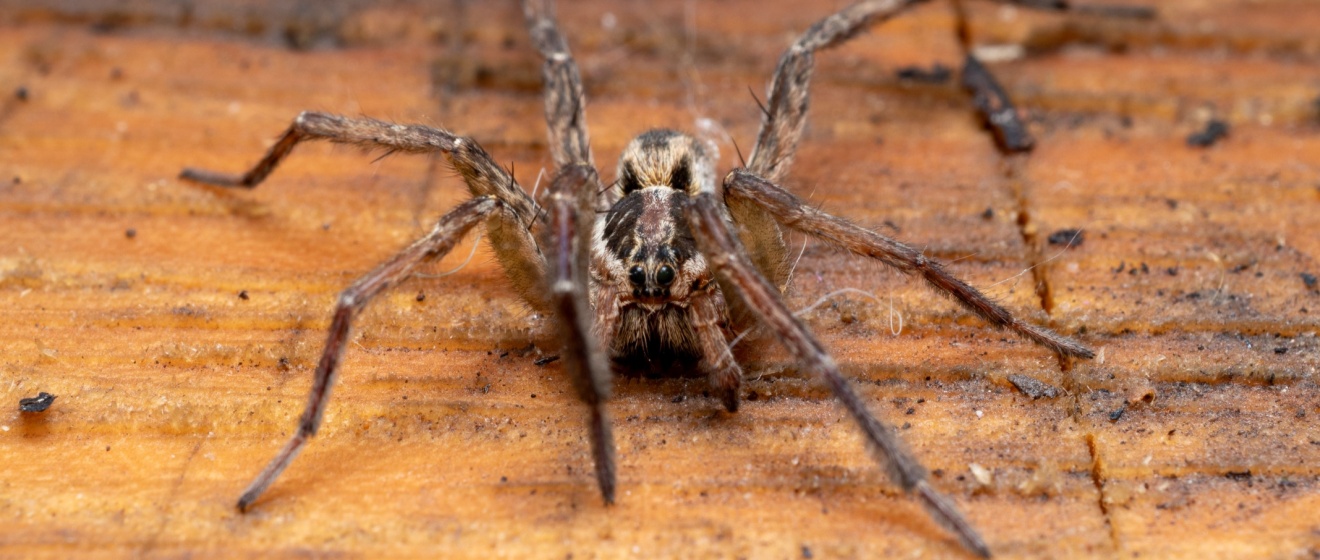
Wolf spiders are large, ground-hunting spiders that do not build webs. They are common in field and agricultural environments and move readily into adjacent yards and homes, particularly in fall. Their size makes them alarming to homeowners, though they are not a medical concern.
Orb weavers establish their characteristic circular webs in the vegetation along field edges and irrigation corridors and in the landscaping of nearby homes. They are most noticeable in late summer when the females reach full size.
Hobo spiders are also more common on properties near open land and irrigation areas, as the abundant insect populations and ground-level habitat suit them well.
What Homeowners Near Fields and Irrigation Can Do
Homeowners in these areas cannot eliminate the source of the spider activity—the open land and irrigation infrastructure that surround them—so the approach focuses on creating effective barriers around the home and reducing the conditions that draw spiders onto the property and into the structure.
Maintaining a clear, well-trimmed zone between the home and adjacent vegetation reduces the pathway spiders use to move from open land toward the structure. Sealing entry points, particularly at ground level, prevents the ground-dwelling species that dominate field and irrigation environments from getting inside. Managing exterior lighting reduces the insect activity around the home that draws spiders. Addressing moisture and reducing harborage around the foundation makes the immediate perimeter of the home less hospitable.
Consistent professional treatment is particularly valuable for homes in these high-activity areas. A property at the edge of open land or near an irrigation corridor faces continuous pressure from the surrounding environment, and a recurring treatment program maintains a barrier that reactive, one-time treatment cannot. Wild West Pest Control’s bi-monthly and quarterly service plans include exterior treatment and web removal that address the ongoing spider activity these properties experience. For homeowners dealing with persistent spider activity near fields or irrigation areas, contact us for a free quote to assess the conditions on your property and put an effective plan in place.