

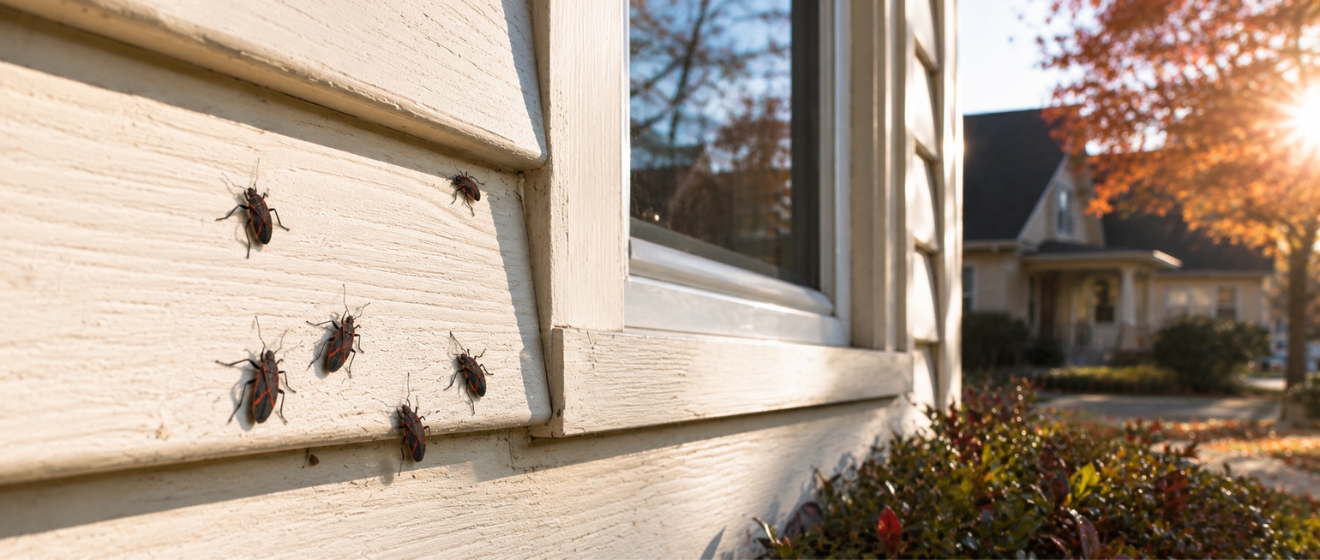
A Boise homeowner may walk outside on a mild fall afternoon and find one wall covered with boxelder bugs while the shaded side of the house looks nearly clear. That pattern is tied to warmth. As nights become colder, boxelder bugs gather on sunlit surfaces that absorb and release heat. South- and west-facing siding, brick, stucco, window frames, and foundation walls can become especially attractive. Wild West Pest Control provides boxelder bug control in Boise for homes dealing with heavy seasonal activity.
Sunlight Creates a Temporary Warm Zone
Boxelder bugs depend on outside temperatures to regulate their activity. A cool night may slow them down, but direct afternoon sun can warm a wall enough to make the insects active again. That is why a surface can suddenly seem covered during the warmest part of the day.
Dark exterior materials often absorb additional heat, although any sunny surface can attract them. The bugs may cluster around window trim, rooflines, vents, and door frames because those areas provide warmth and nearby cracks. A sheltered wall also protects them from wind, making it a convenient staging area before winter.
This behavior usually becomes obvious during late summer and fall. The exact timing shifts with Boise’s weather, seed availability, and temperatures. A stretch of warm days followed by cool nights often produces a noticeable wave of activity.
Where Did All the Bugs Come From?
Boxelder bugs spend the growing season outside. They are strongly associated with female boxelder trees that produce seeds, but they may also feed on the seeds of other maples. Mature landscaping, nearby street trees, and neighboring properties can support populations that later move toward buildings.
Finding them on a home does not prove that a boxelder tree is growing in that yard. Adults can fly, and the warm wall itself is the immediate attraction in fall. Removing a valued tree is rarely a simple or guaranteed answer because other host trees may remain nearby.
The insects are not eating the siding or trying to damage the structure. They are searching for protected places where they can remain through cold weather. The wall provides warmth, and small construction gaps provide potential shelter.
How Boxelder Bugs Move Indoors
Once boxelder bugs collect on the exterior, they investigate narrow openings. Common routes include gaps around windows and doors, siding transitions, roof and soffit intersections, utility lines, attic vents, and openings beneath damaged weatherstripping. A crack that looks insignificant to a person may be large enough for an insect.
After entering, the bugs may settle inside wall voids, attic spaces, or other protected areas. They generally do not establish a breeding population inside the house. However, indoor heat and sunlight can draw overwintering adults into living spaces. That explains why boxelder bugs sometimes appear near upstairs windows in the middle of winter.
Should Homeowners Be Worried About Damage?
Boxelder bugs are nuisance pests. They do not normally bite, sting, consume stored food, or damage structural wood. Large numbers can still create a mess. Crushing them may leave reddish or brown stains on curtains, walls, and upholstery. Dead insects can collect in window tracks and light fixtures.
For bugs already indoors, a vacuum is often the simplest removal tool. Homeowners should empty the vacuum outside in a sealed bag. Repeatedly spraying indoor groups does not correct exterior entry points and may apply product to unnecessary areas.
Prevention Works Best Before the Invasion Peaks
An exterior inspection can reveal loose screens, worn door sweeps, deteriorated caulk, and gaps around pipes or cables. These openings should be sealed with materials appropriate for the location. Vents should be screened without interfering with airflow. Repairs may need to wait until insects are no longer actively occupying a void so they are not trapped inside.
Well-timed professional treatment can help reduce the number of boxelder bugs resting on and entering the structure. The most effective approach considers the building’s sunny sides, likely harborages, and active entry zones. A broad spray applied without inspecting the property can miss the places that matter most.
Why the Same Wall May Be Covered Every Year
Homes with favorable sun exposure, nearby host trees, and accessible cracks can experience a repeating pattern. Even after visible bugs disappear, a new generation may arrive the next fall. Preventive work should therefore focus on both timing and the physical condition of the exterior.
Boise’s bright fall afternoons can keep sunlit walls warm even when nights feel cold. Boxelder bugs take advantage of that small temperature difference. If the same side of the home becomes a gathering place every year, Wild West Pest Control can inspect the pattern, identify access points, and recommend a focused response. Request a quote from Wild West Pest Control for professional boxelder bug help throughout Boise and the Treasure Valley.