

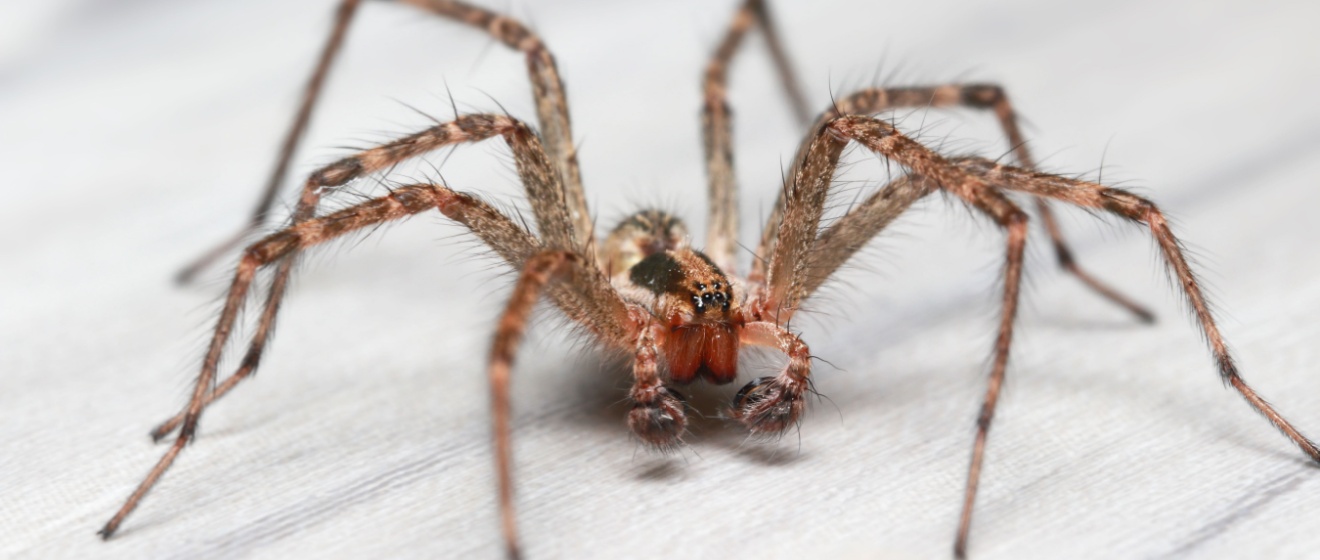
One of the most persistent challenges with hobo spiders is that they are remarkably difficult to identify accurately. Several brown, medium-sized, funnel-web building spiders common in Boise look nearly identical to the untrained eye, and the hobo spider is routinely confused with species that are completely harmless and far more common in homes. This misidentification has consequences—it drives unnecessary worry, and it leads to spiders being blamed for problems they did not cause. This guide explains how to distinguish a hobo spider from the species it is most often confused with.
Wild West Pest Control provides spider control throughout Boise and the Treasure Valley, and accurate identification is the starting point for understanding what you are dealing with. For a broader overview of local species, see The Most Common Spiders Found in Boise Homes.
Why Hobo Spider Identification Is So Difficult
The hobo spider belongs to a group of funnel-web building spiders that includes several visually similar species. In the Boise area, the spiders most often confused with one another are the hobo spider, the giant house spider, and the domestic house spider—all members of the same family, all brown, all funnel-web builders, and all found in similar locations around homes.
Distinguishing between them based on casual observation is nearly impossible. The features that reliably separate them are subtle and often require magnification and close examination. Even experienced observers frequently cannot identify a hobo spider with certainty without examining it under magnification. Claims of hobo spider identification based on a quick glance or a blurry photo should be treated with skepticism—the odds are substantial that the spider in question is one of the more common look-alike species.
The Hobo Spider
The hobo spider (Eratigena agrestis) is a brown spider with a leg span of roughly one to one and a half inches. Its body is brown with a somewhat indistinct pattern of darker markings on the abdomen, sometimes described as a herringbone or chevron pattern. The legs are uniformly colored—and this is one useful distinguishing feature, because the hobo spider’s legs lack the distinct dark bands that some look-alike species have.
Hobo spiders are fast runners—they are capable of moving quickly across the ground, which is one of the behaviors that alarms homeowners who encounter them. They build funnel webs at ground level and are poor climbers. They are most commonly found in basements, crawl spaces, garages, window wells, and along foundation lines.
A frequently cited identification point—that hobo spiders lack the dark leg bands of similar species—is useful but not definitive on its own. The most reliable identification requires examining the spider’s reproductive structures under magnification, which is beyond what most homeowners can do.
The Giant House Spider
The giant house spider (Eratigena atrica, formerly Tegenaria duellica) is a close relative of the hobo spider and is one of the species most commonly mistaken for it. As the name suggests, it is larger than the hobo spider, with a leg span that can reach up to two inches or more—notably larger than a typical hobo spider.
The giant house spider is also a funnel-web builder and occupies the same kinds of spaces as the hobo spider—basements, garages, and low, sheltered locations. It is brown, similar in coloration to the hobo spider, which contributes to the confusion. The giant house spider is harmless.
There is a useful ecological detail here: where giant house spiders are well established, hobo spiders tend to be less common. The giant house spider competes with and may displace the hobo spider, so a home with a strong giant house spider presence may have fewer hobo spiders than it otherwise would. Many spiders identified by homeowners as hobo spiders are in fact giant house spiders.
The Domestic House Spider
The domestic house spider (Tegenaria domestica) is another funnel-web-building relative that is commonly confused with the hobo spider. It is smaller than both the hobo spider and the giant house spider, with a leg span typically under an inch. It has more distinct banding on its legs than the hobo spider, which is one distinguishing feature, and its abdominal markings tend to be more clearly defined.
The domestic house spider is extremely common in homes throughout the region and is completely harmless. It builds funnel webs in corners, basements, garages, and sheltered locations, occupying the same general spaces as its relatives.
Other Boise Spiders Sometimes Confused With Hobo Spiders
Grass spiders are funnel-web builders abundant in lawns and field-edge environments throughout the Treasure Valley. They build sheet-like funnel webs in grass and ground cover, and because the web structure resembles that of the hobo spider, the spiders themselves are sometimes assumed to be hobo spiders when they wander indoors. Grass spiders typically have more distinct longitudinal stripes on the cephalothorax than hobo spiders and are harmless.
Wolf spiders are sometimes confused with hobo spiders due to their brown coloration and ground-dwelling habits, but they are distinguishable on closer inspection. Wolf spiders do not build webs—they are active hunters. They are generally bulkier than hobo spiders, with a different eye arrangement and often more distinct markings. Wolf spiders are harmless despite their intimidating appearance.
The Eye Arrangement Distinction
For those willing to examine a spider closely, eye arrangement is one of the more reliable ways to separate these groups. The funnel-web building spiders—hobo, giant house, and domestic house spiders—have eight eyes arranged in two rows of roughly equal-sized eyes. Wolf spiders, by contrast, have a distinctive eye arrangement with two large, prominent eyes facing forward and additional smaller eyes, which distinguishes them clearly from the funnel-web builders. This examination requires the spider to be still and usually requires magnification.
What to Do With an Unidentified Spider
Given the difficulty of accurate identification, the practical approach for most Boise homeowners is not to attempt a definitive species determination but to address the conditions that allow spiders to establish themselves indoors. Whether a funnel-web spider in the basement is a hobo spider, a giant house spider, or a domestic house spider, the management approach is the same: reduce harborage, seal entry points, address the insect populations that sustain the spiders, and treat the areas where they are active.
If you want accurate identification and effective treatment, professional pest control is the most reliable route. Wild West Pest Control inspects, identifies, and treats spider activity throughout Boise and the Treasure Valley. Contact us for a free quote if spiders are a concern in your home.