

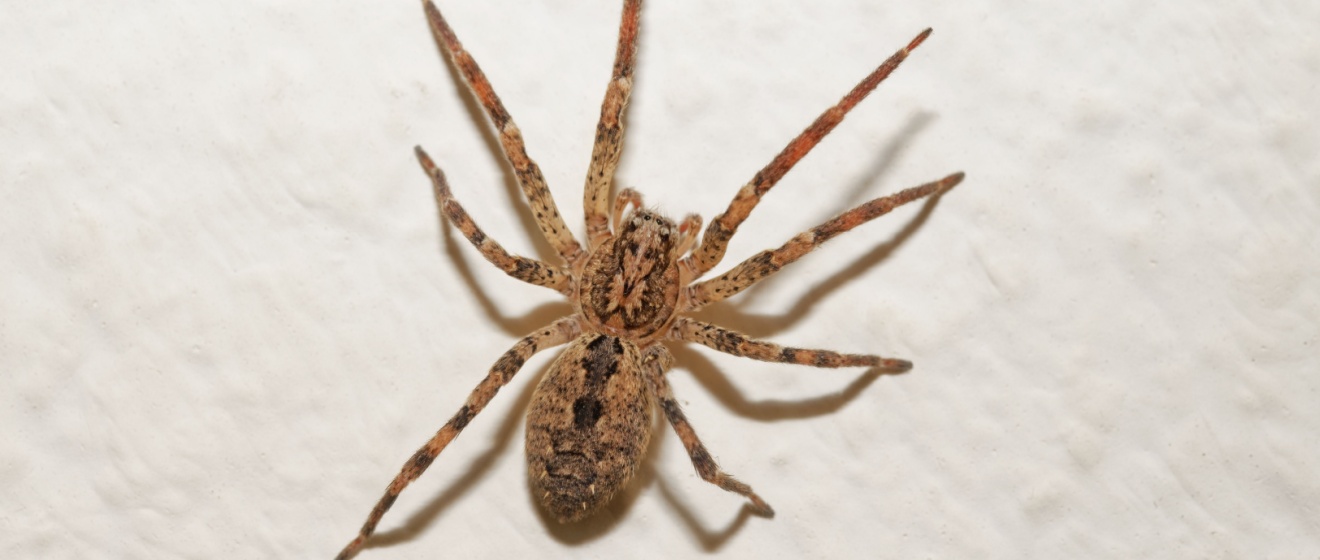
Of all the spaces in a Boise home, three attract hobo spiders more consistently than any others: basements, crawl spaces, and garages. Homeowners who encounter hobo spiders almost always encounter them in one of these three locations, and the reason comes down to a combination of the spider’s biology, its hunting strategy, and the specific conditions these spaces provide. Understanding why these areas draw hobo spiders is the foundation for making them less hospitable.
Wild West Pest Control provides spider control throughout Boise and the Treasure Valley, and basements, crawl spaces, and garages are where we most frequently address hobo spider activity.
How Hobo Spiders Hunt and Why It Matters
Hobo spiders are funnel-web builders. They construct a flat, sheet-like web with a funnel-shaped retreat at one edge, and they wait inside the funnel for prey insects to wander onto the web’s surface. When an insect contacts the web, the hobo spider rushes out from the funnel, captures the prey, and retreats. This hunting strategy requires specific conditions: a flat or near-flat surface to build the web, a protected location for the funnel retreat, and a steady supply of ground-level insects to capture.
Hobo spiders are also ground-dwelling and poor climbers. Unlike many spider species that can scale walls and occupy elevated spaces, hobo spiders are largely confined to ground level and low surfaces. This is why they are found in basements, crawl spaces, and garages rather than in upper floors and ceilings—these are the ground-level, low-traffic spaces where their web-building and hunting strategy works best.
Basements
Basements provide nearly ideal hobo spider habitat. They are at ground level; they are typically lower-traffic than the main living areas of a home, and they offer abundant flat surfaces and protected corners for funnel web construction. The undisturbed corners, the spaces behind stored items, the areas along the base of foundation walls, and the gaps around basement window wells all provide the kind of sheltered web sites hobo spiders seek.
Boise basements are particularly attractive when they have moisture issues. Damp basements support higher insect populations, which provides more prey for hobo spiders. A basement with humidity problems, occasional water intrusion, or poor ventilation will sustain a larger hobo spider population than a dry, well-maintained basement, simply because the food supply is greater.
Unfinished basements and basement storage areas are the most common hobo spider locations within a home. The combination of low traffic, abundant harborage, and proximity to ground-level entry points makes these spaces the most reliable place to find hobo spider funnel webs in a Boise home.
Crawl Spaces
Crawl spaces are arguably the most hospitable environment for hobo spiders in the entire structure, and many crawl spaces support substantial hobo spider populations that homeowners are completely unaware of simply because they rarely enter the space.
A typical Boise crawl space offers everything a hobo spider needs. It is at ground level with direct soil contact in many cases. It is dark, undisturbed, and protected from weather. It maintains relatively stable temperatures. And it provides abundant flat surfaces—the soil floor, the sill plate, and the spaces between floor joists—for web construction. Crawl spaces with vents that allow insects to enter provide a steady food supply.
Crawl spaces also function as a reservoir that continually supplies the rest of the home. Hobo spiders established in a crawl space move upward into the living space through gaps around plumbing penetrations, utility access points, and the openings where the crawl space connects to the structure above. A persistent hobo spider problem in a home’s main level often originates from an established population in the crawl space below.
Garages
Garages are the third major hobo spider stronghold in Boise homes, and they share the key characteristics that draw the spiders to basements and crawl spaces—ground-level access, lower traffic than living areas, and abundant harborage. Garages add a few factors of their own.
Garage doors are a significant entry point. The gap along the bottom of a garage door, particularly at the corners where the seal deteriorates over time, provides easy ground-level access for hobo spiders. Garages are also frequently cluttered with stored items—boxes, equipment, seasonal storage—that create the protected, undisturbed spaces hobo spiders use for funnel web sites.
Garages often have higher insect activity than living areas as well. Doors that are opened frequently, gaps around the structure, and the storage of items that attract insects all contribute to a garage insect population that provides hobo spiders with a reliable food source. The corners of a garage, the spaces behind and beneath stored items, and the areas along the base of the walls are where hobo spider webs accumulate most heavily.
The Late-Summer Increase
Hobo spider encounters in Boise basements, crawl spaces, and garages increase noticeably in late summer and early fall. This is the period when male hobo spiders leave their webs and wander in search of females to mate with. Wandering males are more mobile and more likely to be encountered in the open than the females that remain in their funnel webs.
This seasonal wandering is why homeowners often report a sudden increase in hobo spider sightings in August, September, and October—they are encountering the roaming males that are actively moving through basements, crawl spaces, and garages. The increase in sightings does not necessarily mean the population has grown; it means the spiders are more visible because the males are out moving rather than waiting in webs.
This is also the period when hobo spiders are most likely to be found in living areas, having wandered up from the crawl space or in from the garage. A hobo spider found in a main-level bathroom or bedroom in September is most often a wandering male that has strayed from one of the three primary harborage zones.
Making These Spaces Less Hospitable
Reducing hobo spider activity in basements, crawl spaces, and garages involves making these spaces less suitable for web building and reducing the insect populations that sustain the spiders.
Reduce clutter. Eliminating the boxes, stored items, and debris that provide protected web sites reduces the available harborage. Storing items in sealed plastic bins rather than open boxes and keeping stored materials off the floor and away from walls reduces the spaces hobo spiders use.
Address moisture. Damp basements and crawl spaces support more insects and therefore more spiders. Addressing humidity, water intrusion, and ventilation problems reduces the food supply that sustains hobo spider populations. Crawl space encapsulation is worth considering for homes with persistent crawl space moisture issues. For more on why these spaces attract spiders, see Why Spiders Love Boise Basements and Garages.
Seal ground-level entry points. Because hobo spiders are poor climbers, sealing entry points at ground level is especially effective. Gaps at the base of garage doors, foundation cracks, crawl space vents, and openings around utility penetrations near the ground are the primary entry routes.
Reduce exterior insect attraction. Exterior lighting near ground-level entry points draws insects that in turn support spider populations. Adjusting exterior lighting reduces the food supply near entry points.
Wild West Pest Control addresses hobo spider activity in basements, crawl spaces, and garages throughout Boise. Our spider control service includes inspection of these key areas, web removal, targeted treatment, and recommendations for reducing the conditions that draw spiders in. Contact us for a free quote to address a hobo spider problem in your home.