
Boise’s climate produces one of the more dramatic seasonal pest rotations in the western United States. Hot, dry summers push insects indoors for moisture and relief from the heat. Cold winters—with sustained freezing, snow, and temperatures well below zero—drive rodents and overwintering pests into heated structures. And the transitions between those extremes produce some of the most intense pest activity of the year. If you own a home in the Treasure Valley, here are the species you are most likely to encounter throughout the year and what drives each one into your Boise home.
Spring and Summer Pests (March – September)
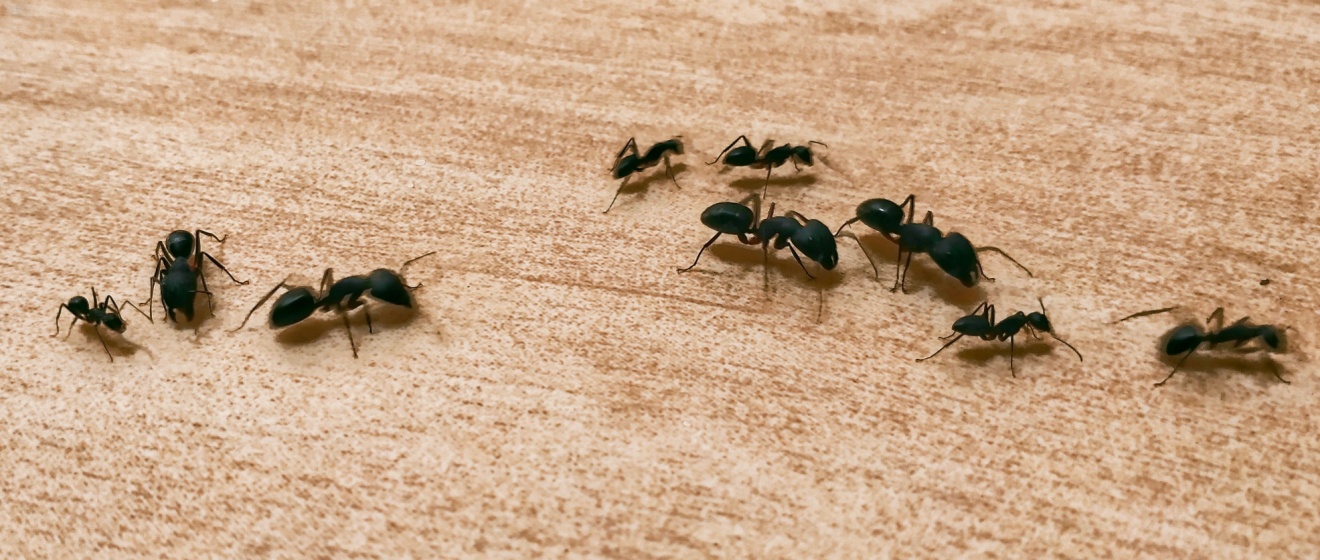
- Ants: Ants are the most common insect complaint in Boise homes during the warm months. Pavement ants nest under driveways, walkways, and patios—pushing soil mounds through cracks in concrete and foraging in kitchens. Odorous house ants nest in moist soil near foundations and inside wall voids. Carpenter ants—larger and more destructive—excavate galleries inside moisture-damaged wood and can cause structural damage if left untreated. Ant activity ramps up in March and April as soil warms and peaks during the hottest summer months.
- Spiders: Spider activity increases significantly in spring and summer as the insect populations they feed on become abundant. Common species in Boise include hobo spiders, black widows, wolf spiders, common house spiders, and cellar spiders. Black widows are found in garages, meter boxes, under outdoor furniture, and in sheltered exterior locations. Hobo spiders are ground-level spiders commonly encountered in basements and garages.
- Wasps and stinging insects: Paper wasps, yellow jackets, and bald-faced hornets build nests around Boise homes from late spring through early fall. Yellow jackets become most aggressive in August and September as colony populations peak and food sources decline. Nests in eaves, soffits, behind siding, under decks, and in ground-level voids are common.
- Mosquitoes: The Boise River, irrigation canals throughout the Treasure Valley, and residential landscaping with poor drainage create substantial mosquito breeding habitat. Mosquito activity runs from approximately April through October, with peak populations in July and August. West Nile Virus is present in Idaho, making mosquito control a public health concern as well as a comfort issue.
- Earwigs, crickets, and beetles: These warm-season insects are common around Boise homes, particularly in yards with irrigation, mulch, and dense vegetation. They enter homes through foundation gaps and under doors, driven by moisture-seeking behavior and attracted to exterior lighting.
Fall Pests (September – November)
- Box elder bugs: This is one of the signature pest events in Boise. In September and October, box elder bugs congregate on the south- and west-facing exterior walls of homes—sometimes by the hundreds—seeking entry into wall voids where they shelter through winter. Once inside the walls, they emerge into living spaces on warm days throughout the winter months. Professional perimeter treatment before the fall migration is the only effective prevention. Wild West Pest Control’s blog on box elder control covers this pest in detail.
- Rodents: As temperatures drop in October, mice and rats begin migrating toward heated structures. Boise homes near open land, agricultural fields, and the foothills are particularly vulnerable. Mice can enter through gaps as small as a dime. Once inside, they nest in wall voids, attics, and garages—contaminating food, damaging wiring, and reproducing rapidly through the winter. Knowing the signs of a rodent problem helps homeowners catch the issue early.
- Spiders moving indoors: As outdoor prey diminishes in fall, spiders—including black widows and hobo spiders—move toward the interior of the home. Basements and garages are the most common locations for fall spider encounters.
Winter Pests (December – February)
Boise’s cold winters kill a significant portion of the outdoor insect population—a natural reset that warmer climates do not provide. But the pests that matter most in winter are the ones already inside:
- Rodents that entered in fall are fully established, nesting, and breeding in wall voids, attics, and garages. A mouse problem that started in October is a significant infestation by January if it is not addressed.
- Box elder bugs emerge from wall voids into living spaces on warm winter days—appearing on windows, walls, and light fixtures.
- Spiders remain active in basements, garages, and lower levels of the home.
Why Year-Round Awareness Matters
Every season in Boise has active pest pressures. Spring and summer bring the insect surge. Fall brings the invasion. Winter harbors the indoor populations that developed during fall. The homeowners who experience the fewest problems are the ones whose protection covers every phase of the cycle.
If you want to know what pests are active on your Boise property right now, contact Wild West Pest Control for a free quote.